Reviewing Personalized Dog Bone for Business Merch
As an embroidery designer who has spent years digitizing and reviewing files for commercial use, I approach every new machine embroidery design with a critical eye. It is not just about whether the art looks cute on a screen; it is about how that design translates into a tangible, durable, and profitable finished product. Recently, I evaluated the Personalized Dog Bone design, and I want to share my professional perspective on how this asset fits into the workflow of small business owners, apparel decorators, and handmade brands.
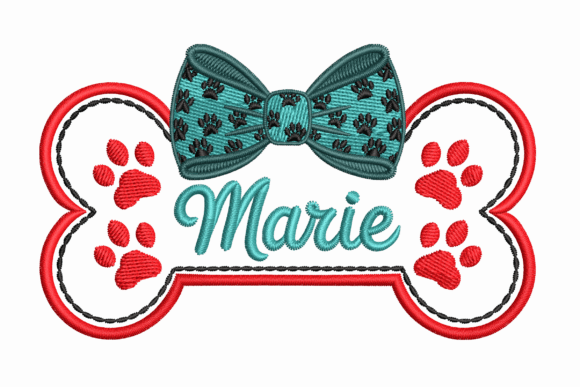
The first impression of the Personalized Dog Bone is undeniably friendly and playful, yet it maintains a level of stylistic cohesion that suggests professionalism. The composition features a dog bone frame adorned with red paw prints, anchored by a teal bow tie with black paw patterns. The inclusion of the name "Marie" in a teal script adds a layer of customization that is crucial for modern branding. For businesses in the pet industry, this design strikes a balance between whimsical charm and clean execution. It does not feel cluttered, which is a common pitfall in themed embroidery. Instead, it feels like a deliberate piece of brand identity work rather than just decorative clipart.
Real-World Applications for Small Business Merch
When considering where to deploy this design, we must look beyond simple hobby projects. For a boutique pet brand or a local groomer, the Personalized Dog Bone serves as a versatile tool for creating small business merch. Here is how I envision this design performing in various commercial contexts:
- Embroidered Patches: This is perhaps the strongest application. The bone frame provides a natural border, making it ideal for cut-edge or merrowed edge patches. These can be sold as standalone accessories or used to brand packaging.
- Staff Uniforms and Aprons: For pet sitters, walkers, or groomers, having a consistent look builds trust. This design works well as a chest logo accent on polo shirts or as a larger focal point on apron embroidery. The teal and red color scheme stands out against neutral uniform colors like navy, khaki, or white.
- Cap Embroidery: Placing this on the front of a dad hat or trucker cap can create a recognizable team uniform. However, the curved surface of a cap requires careful attention to the script text to ensure it remains legible.
- Tote Bag Design: Canvas totes are popular for carrying pet supplies. The sturdy nature of canvas fabric supports the stitch density required for the paw prints and bow tie details, making it a practical tote bag design for retail sale.
- Customer Gifts and Loyalty Programs: Small embroidered items, such as key fobs or mini tags, can serve as high-value perceived gifts for loyal customers, enhancing buyer engagement.
Navigating Technical Challenges in Production
While the aesthetic appeal is strong, any experienced embroiderer knows that technical execution is where profits are made or lost. There are specific areas where the Personalized Dog Bone requires careful handling during production. The interplay between the red paw prints, the teal bow, and the script name means that thread colors must have sufficient contrast against the base fabric. If you are stitching this on a dark uniform, you may need to adjust the underlay or choose a lighter fabric to prevent the colors from muddying.
Another critical factor is stitch density. The bow tie features black paw patterns, which implies detailed satin or fill stitches. If the density is too high for the chosen fabric, you risk puckering or needle breaks. I always recommend testing the design on a scrap piece of the exact material you intend to use. For textured fabrics, such as terry cloth towels or heavy canvas, the fine details of the script name might get lost. In these cases, increasing the size of the design or simplifying the stabilizer approach might be necessary.
Furthermore, consider the hoop size relative to the item. If you are placing this on a small pet collar tag or a narrow sleeve, ensure the dimensions fit without distorting the aspect ratio. Curved surfaces, like the front of a cap or the pocket of a shirt, can cause registration issues if the design is too wide. Always hoop your stabilizer correctly and use a topping if stitching on pile fabrics to keep the stitches crisp.
Enhancing Brand Identity and Customer Trust
In the world of commercial embroidery, consistency is key to building customer trust. A well-executed Personalized Dog Bone signals to your clients that you pay attention to detail. When a customer sees a neatly stitched logo on a staff member's apron or a high-quality patch on their purchase, it reinforces the perception of a premium, handmade product. This visual consistency helps in brand recognition. If your bakery or creative studio uses this design across multiple touchpoints—from employee wear to packaging accents—it creates a cohesive narrative.
For Etsy sellers and digital file buyers, offering this as a customizable option can significantly boost sales. Allowing customers to swap "Marie" for their own pet’s name transforms a standard item into a personalized keepsake. This emotional connection drives higher price points and increased buyer engagement. However, always ensure you have the correct commercial licensing before selling products made with this digital embroidery file.
Practical Designer Notes for Implementation
Before you load this design into your machine for a large production run, follow these practical steps to ensure quality control:
- Test in Black and White First: Stitch out the design using only black thread on white fabric. This helps you identify any structural issues, such as gaps in coverage or misaligned elements, without the distraction of color.
- Check Scalability: Verify if the design retains its integrity at smaller sizes. The script text is often the first element to become illegible when scaled down for small patches.
- Review Thread Contrast: Ensure the teal and red threads pop against your chosen fabric. Create a printable mockup to visualize the final look before committing to thread costs.
- Inspect Spacing and Density: Look closely at the bow tie and paw prints. Are the stitches too close together? Adjust your tension or density settings if necessary to prevent fabric distortion.
- Confirm Hoop Size and Stabilizer: Match the hoop size to the design dimensions. Use an appropriate stabilizer—cut-away for stretchy fabrics, tear-away for stable wovens—to support the stitch count.
- Validate Commercial Licensing: Double-check the license terms associated with the embroidery file. Ensure you are permitted to sell physical goods made with this design, especially if you are scaling up your custom apparel line.
In conclusion, the Personalized Dog Bone is a robust addition to your library of design assets. It offers a blend of playful aesthetics and professional structure that suits a wide range of applications within the Dogs and Embroidery niche. By paying attention to technical details like fabric texture, stabilizer choice, and color contrast, you can leverage this design to create high-quality merchandise that elevates your brand. Whether you are outfitting a team of pet groomers or creating unique gifts for a boutique shop, this design has the potential to become a staple in your product lineup. Always prioritize testing and quality assurance to ensure that every stitched item reflects the professionalism of your business.