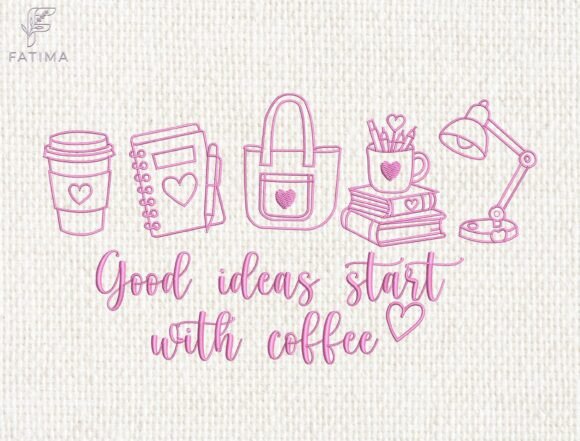
Good Ideas Start with Coffee Embroidery Review
As a designer who spends half my life digitizing and the other half stitching, I have learned that the best machine embroidery design files are not just about technical perfection. They are about mood, placement, and how they translate from a digital screen to a tangible finished product. When I first loaded the Good Ideas Start with Coffee Embroidery file into my software, I was looking for more than just cute clipart. I needed a design that could carry weight in a commercial setting while retaining the charm of a handmade item. This review breaks down how this specific embroidery project holds up under real-world scrutiny, from hoop selection to final stitch-out.
First Impressions and Aesthetic Mood
The immediate appeal of Good Ideas Start with Coffee Embroidery lies in its balanced composition. It avoids the cluttered look that plagues many lifestyle-themed designs. Instead, it offers a curated row of elements that feel intentional and calm. For those of us creating design assets for small businesses, this clarity is crucial. The visual personality suggests warmth, routine, and creativity. It is not loud; it invites the viewer to pause. This makes it an excellent candidate for products where the goal is comfort rather than high-energy excitement.
In terms of layout, the design respects negative space. This is often overlooked by beginners but is vital for professional-looking custom apparel. The spacing between the text and the accompanying icons allows the fabric texture to breathe. If you are working with a textured linen or a waffle-knit towel, this openness ensures the design does not fight against the material. It feels modern yet timeless, fitting seamlessly into both rustic and minimalist brand aesthetics.
Real-World Application: The Tote Bag Test
To truly evaluate a design, you must imagine it on a specific product. I visualized this design on a heavy canvas tote bag design, a staple for any Etsy seller or craft fair vendor. Canvas is unforgiving; it shows every gap in coverage and every misaligned stitch. Here, the Good Ideas Start with Coffee Embroidery performed well. The line work appeared crisp, and the thematic elements aligned perfectly with the utility of the bag.
I also considered its use on a crewneck sweatshirt. Sweatshirt embroidery requires careful attention to stitch density. If a design is too dense, it creates a stiff, cardboard-like patch on soft fleece. If it is too light, the fabric shows through, looking cheap. This design strikes a reasonable balance. However, I would recommend using a cut-away stabilizer to support the weight of the stitches without adding excessive bulk. The result is a cozy, inviting look that appeals to customers seeking personalized comfort wear.
Versatility Across Product Lines
Beyond bags and sweaters, this embroidery file shows promise in several other categories. For baby embroidery, such as a bib or a onesie, the theme resonates with exhausted parents who understand the sentiment deeply. In this context, scaling the design down is essential. You must ensure that the smaller details remain distinct when reduced. For kitchen textiles, like aprons or tea towels, the coffee motif is naturally at home. It adds a touch of personality to functional items, increasing their perceived value as a personalized gift.
For commercial embroidery projects, such as branded merchandise for a local cafe or a co-working space, this design serves as a subtle branding tool. It is not overtly promotional, which makes it more likely to be worn or used daily. This increases brand visibility in an organic way. Whether used for holiday embroidery gifts or year-round small shop product lines, the versatility is a strong selling point.
Technical Considerations and Stitch Quality
From a technical standpoint, the mix of stitch types in Good Ideas Start with Coffee Embroidery requires attention. The design likely utilizes a combination of satin stitch for borders or small icons and fill stitch for larger areas or text. Satin stitches provide a shiny, professional finish but can snag if they are too long. Fill stitches add texture and durability but increase production time.
When reviewing the thread colors, consider contrast. On dark fabrics, lighter threads will pop, but you must ensure the underlying structure is solid. On light fabrics, subtle tonal variations can look sophisticated but may lack definition from a distance. I always advise running a test on scrap fabric identical to your final material. Check for thread breaks, especially in tight corners or detailed areas. If the design includes tiny lettering, verify that it remains legible at your intended size. Blurred text is the quickest way to lose customer trust.
Another critical factor is the hoop size. Ensure your machine can accommodate the full width of the design without re-hooping, which risks misalignment. If you are stitching on curved surfaces like caps, you may need to adjust the pull compensation settings to prevent distortion. The design’s symmetry helps here, but testing is non-negotiable for professional results.
Where to Use Caution
While versatile, this design is not universal. Avoid using it on highly stretchy fabrics without proper stabilization, as the stitches may pucker or distort over time. Thin, delicate fabrics like silk or chiffon are also risky unless you are an experienced handler of lightweight materials. The weight of the embroidery could drag down the fabric, ruining the drape.
Additionally, be mindful of products that undergo frequent, harsh washing. While embroidery is durable, the friction can cause fraying over time if the stitch density is too low or if the edges are not properly secured. For items like gym bags or work uniforms that see heavy abuse, consider reinforcing the back with additional stabilizer or choosing a simpler version of the design with fewer intricate details.
Enhancing Brand Value and Customer Trust
Ultimately, the success of Good Ideas Start with Coffee Embroidery depends on how it enhances your brand. A well-executed embroidery project signals quality and care. It tells the customer that you did not just slap a print on a shirt; you invested time and skill into creating a handmade product. This perception justifies higher price points and fosters loyalty.
When creating printable mockup images for your online store, ensure the lighting highlights the texture of the stitches. Show close-ups that reveal the precision of the work. This transparency builds confidence. Whether you are selling the digital embroidery file itself or the finished item, clear communication about the design’s features and limitations is key. Always confirm licensing terms before selling. Some designers allow unlimited commercial use, while others have restrictions. Respect these boundaries to maintain professionalism in the creative community.
In conclusion, Good Ideas Start with Coffee Embroidery is a solid addition to any designer’s library. It offers aesthetic appeal, technical reliability, and broad applicability. By paying attention to fabric choice, stabilization, and stitch quality, you can transform this digital asset into a standout physical product that resonates with your audience. It is a reminder that even simple themes, when executed with precision, can drive meaningful engagement and sales in the competitive world of custom Work and lifestyle goods.